How to Identify Praying Mantises: Look for the Foreleg Spot
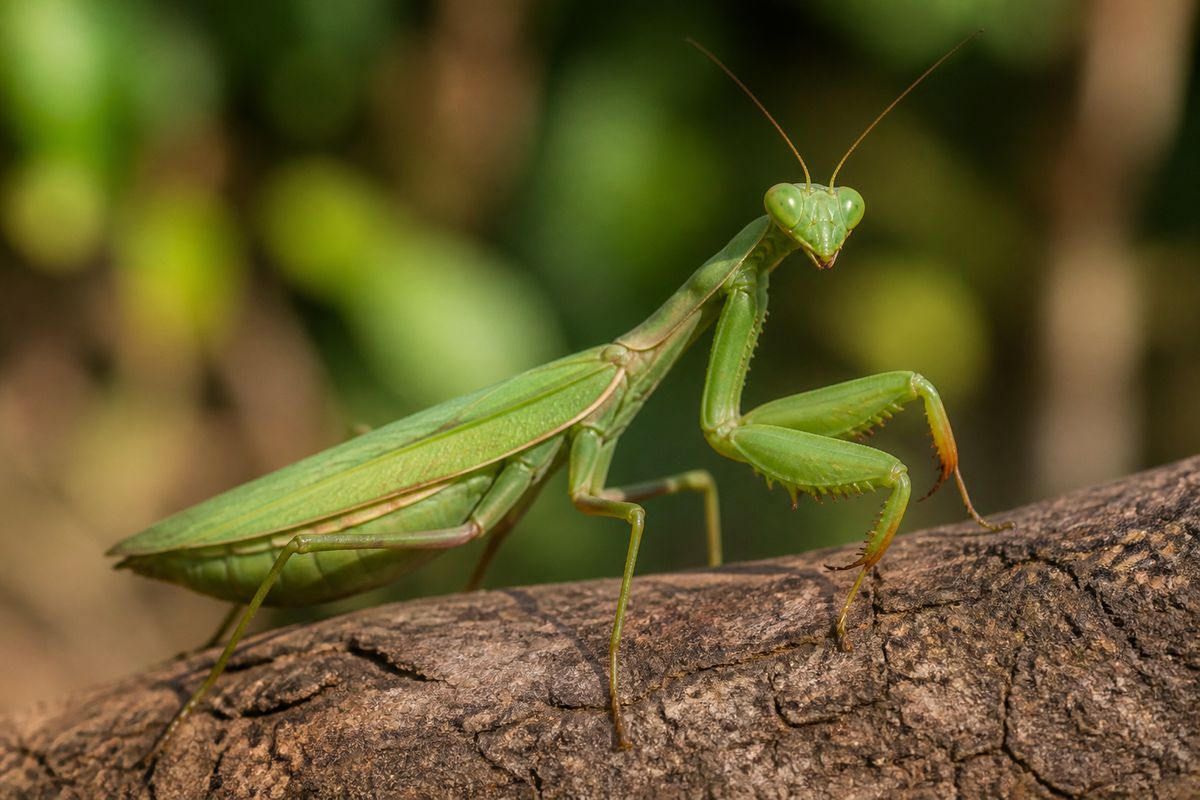
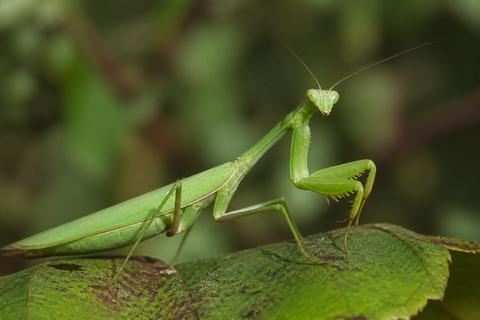
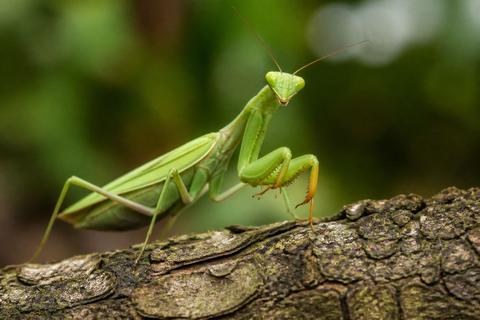
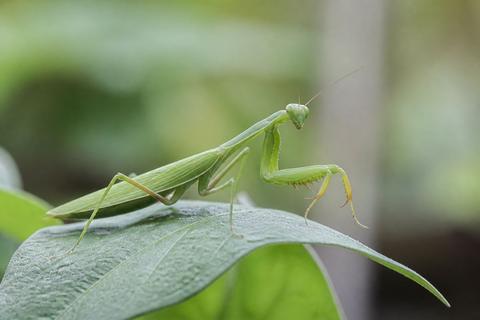
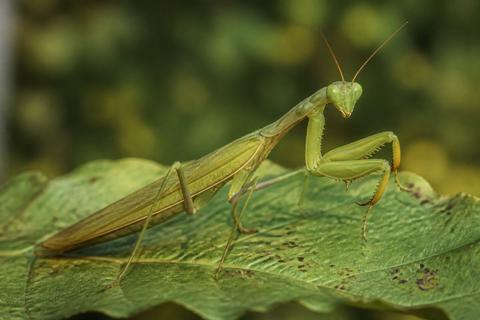
How to identify praying mantises starts with the front legs, not the color. Every mantis in the order Mantodea folds its spiny raptorial forelegs in a posture that looks like clasped hands, which is where the common name comes from. Beyond that shared trait, size, coloring, and one small marking near the leg joint separate the species you're likely to find in a US yard.
Body Plan
A mantis body has three sections: a triangular head that can swivel to track prey, a long thorax, and a segmented abdomen. Adults in North America typically run 2 to 5 inches long depending on species. The raptorial forelegs are lined with spines used to pin insects in place, and the head's large compound eyes give the mantis strong depth perception for striking.
Color
Mantises show up in green, brown, tan, and occasionally pink, and the color usually matches the plant material the mantis hunts from rather than the species itself. A single species can include both green and brown individuals.
Predatory Behavior
Mantises are ambush predators. They hold still against a leaf or stem, blending into the background, and strike in a fraction of a second when prey passes within reach. They eat virtually anything they can capture, including other beneficial insects, not just pest species, so their presence in a garden isn't automatically a net positive for other predators.
Telling the Three Common Species Apart
Three species account for most mantis sightings in the US: the Chinese mantis, the European mantis, and the Carolina mantis. Size and one leg marking do most of the identification work.
Chinese Mantis (Tenodera sinensis)
The largest of the three, the Chinese mantis reaches up to five inches long. It's usually tan or brown with a pale green or yellow stripe running along the outer edge of each wing. It was introduced from Asia and is now widespread east of the Rockies.
European Mantis (Mantis religiosa)
The European mantis tops out at about three inches long as an adult, noticeably smaller than the Chinese mantis, and is more consistently green. The giveaway is on the inside of the front leg near where it meets the body: a spot that can be solid black or black with a white center. No other common US species has this marking, so it's the fastest way to confirm a European mantis in hand.
Carolina Mantis (Stagmomantis carolina)
The Carolina mantis is the smallest of the three, at roughly 2 to 2.5 inches long, and one of the few mantises native to North America rather than introduced. Its wings are shorter relative to its body than the other two species, especially in females, which sometimes leaves the last few abdominal segments exposed.
Reading Head and Leg Details
If size and color leave you unsure, check two smaller features. First, the facial shield, the flat plate between the eyes, is roughly square on the Chinese mantis and has vertical striping. Second, look again at the coxa, the leg segment closest to the body, for that black or bullseye spot; its presence or absence separates European mantises from the other two species faster than color or size alone.
Nymphs and Adults Look Different
Mantises hatch from an ootheca, a hardened, straw-colored, foam-like egg case attached to a twig or stem that can hold dozens to hundreds of eggs over winter. Nymphs that emerge in spring resemble miniature wingless adults and often hold the abdomen tip curled upward, a posture that fades as they mature. By late summer and fall, most mantises you'll see are full-grown adults with developed wings.
Mating Season Behavior
During the fall mating period, female mantises sometimes kill and eat the male during or after copulation. Field studies put the rate at roughly 13 to 28 percent of encounters in the wild, not the near-universal outcome it's often described as. It's a real but situational behavior, more common when females are hungry or when males approach carelessly, not a fixed rule of mantis reproduction.
Where to Look
Gardens, meadow edges, and any spot with tall vegetation and steady insect traffic are the best places to find mantises, since they station themselves where prey is abundant. Checking a local field guide for which of the three species is documented in your state will narrow the identification further before you even look at the mantis itself.