How to Identify Ladybugs: Spots, Size, and Color
How to Identify Ladybugs comes down to four things: shape, spot pattern, size, and where you found the beetle. Coccinellidae includes more than 6,000 species worldwide, and coloration alone will not tell you which one is on your porch rail. Pairing the color pattern with size and habitat narrows it down fast.
Body Shape and Basic Anatomy
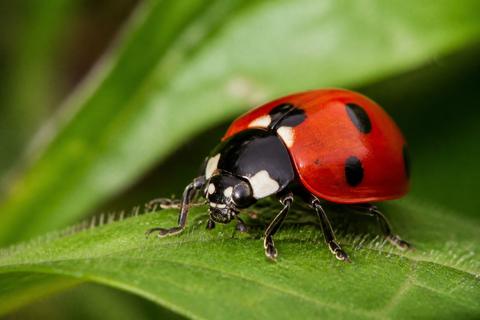
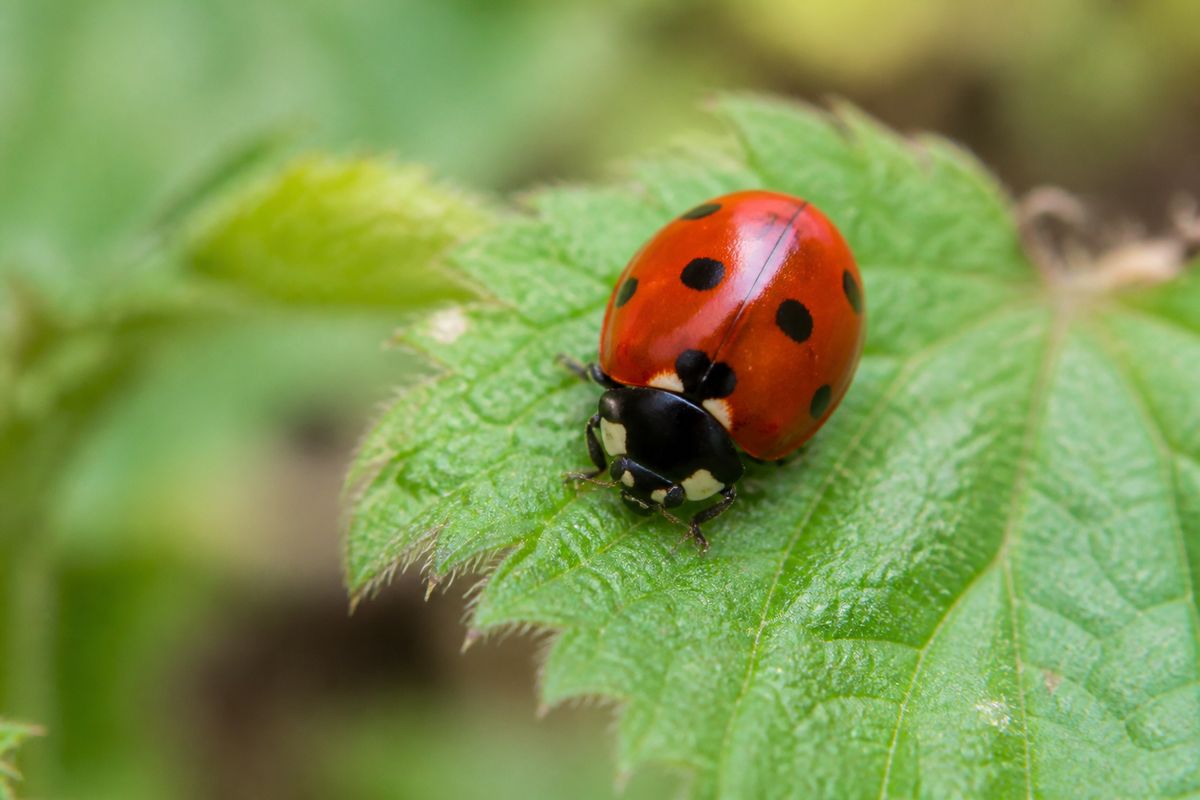
Ladybugs have a domed, oval-to-round body with short clubbed antennae and hard forewings (elytra) that meet in a straight line down the back, covering a folded pair of flight wings underneath. The head is often tucked partly under a shield-like pronotum, the plate just behind the head. That pronotum carries its own pattern, separate from the elytra, and is worth checking before you settle on a species from color alone.
Reading Color and Spot Patterns
Spot count and color are the fastest clues, but several species overlap enough that you need a second feature to confirm.
Seven-Spotted Ladybug
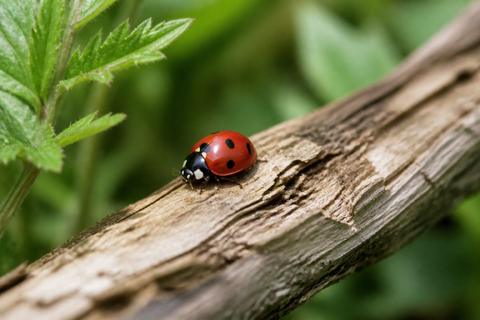
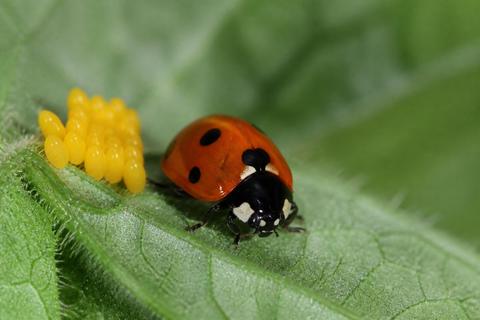
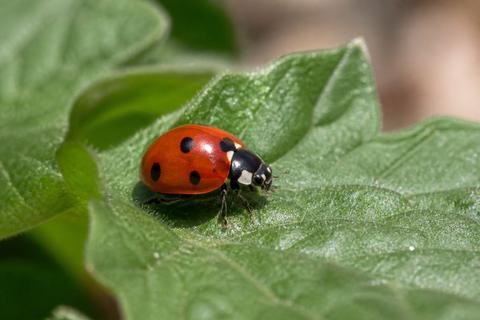
The seven-spotted ladybug (Coccinella septempunctata) is orange-red with seven black spots: three on each elytron and one shared spot at the center where the wing covers meet. Adults run 6.5 to 7.8 mm long, and the head shows two small white patches. It is the most common ladybird in Europe and has been established across North America since the 1970s.
Twelve-Spotted (Pink Spotted) Lady Beetle
The pink spotted lady beetle (Coleomegilla maculata) is pink to salmon-red with twelve black spots, six per elytron. It is native to the Americas and tends to be more elongated than round compared to Coccinella species.
Convergent Lady Beetle
The convergent lady beetle (Hippodamia convergens) can show anywhere from zero to about 13 black spots on orange elytra, so spot count alone will not confirm it. The reliable mark is on the pronotum: two white stripes that angle toward each other, which is where the "convergent" name comes from.
Two-Spotted Lady Beetle
The two-spotted lady beetle (Adalia bipunctata) is smaller, around 4 to 5 mm, with a red base color, one black spot on each elytron, and two small white spots on the head. It also occurs in an uncommon melanic form: black elytra with four or six red spots.
Size Ranges to Expect
Most ladybirds people encounter fall between 4 and 10 mm. On the small end, Adalia bipunctata measures 4 to 5 mm. The multicolored Asian lady beetle (Harmonia axyridis) runs larger, 5.5 to 8.5 mm, and is often the biggest ladybug found indoors in fall. Worldwide, the family spans a far wider range, from about 1 mm micro-species up to roughly 18 mm for the largest tropical Coccinellidae, so size alone is a rough sort, not a species ID.
The Asian Lady Beetle Problem
The multicolored Asian lady beetle is the species most likely to confuse people, because its color and spot count are not fixed. Elytra range from pale yellow to deep red, spot counts run from none to as many as 19, and the pronotum is white with a black M- or W-shaped mark. The one constant is behavior: as temperatures drop in fall, adults aggregate in large numbers and seek shelter in and around buildings, often on the sun-exposed side of light-colored walls, then work their way indoors through gaps around windows and siding. Finding dozens or hundreds of similarly shaped beetles clustered on a wall in October is itself a strong identifier, regardless of individual coloring.
Underside, Legs, and Texture
The underside (venter) and legs are usually black or dark brown even in brightly colored species, which helps separate true ladybugs from mimics like tortoise beetles. Most species show a smooth, glossy elytra surface; a few, like Epilachna species, have a fuzzy or matte texture and are plant-feeding rather than predatory.
Feeding Clues
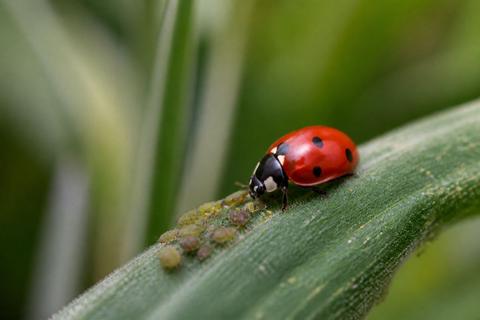
Most Coccinellidae are aphid predators, and both larvae and adults can be found on the same plants as aphid colonies. Larvae look nothing like the adults: elongated, spiny, gray-and-orange grubs that are frequently mistaken for pests and killed by mistake. A few genera break the rule. Epilachna species eat leaves and cause visible skeletonized damage on squash and bean plants, and Psyllobora species feed on powdery mildew instead of insects.
Habitat and Season
Where and when you find a ladybug narrows the list further. Garden and crop settings with aphid infestations favor Coccinella, Adalia, and Harmonia. Meadows and prairie edges are better spots for native species like Hippodamia. Late fall clustering on building exteriors points strongly to Harmonia axyridis, while winter clusters under bark or leaf litter in wooded areas are more likely native species overwintering in place rather than seeking indoor shelter.
Confirming a Rare Find
If your spot count and pattern do not match anything above, especially in the eastern United States, take a clear photo of the pronotum and elytra. Several once-common native species, including the nine-spotted lady beetle (Coccinella novemnotata), have declined sharply in the eastern United States since the 1980s, a period that overlaps with the spread of Harmonia axyridis though researchers have not established a clear causal link between the two. Confirmed native sightings are useful records for regional insect surveys. A field guide specific to your state, or a clear macro photo submitted to an identification forum, will get a firmer answer than color alone.