Where Do Japanese Beetles Live? Range Since 1916
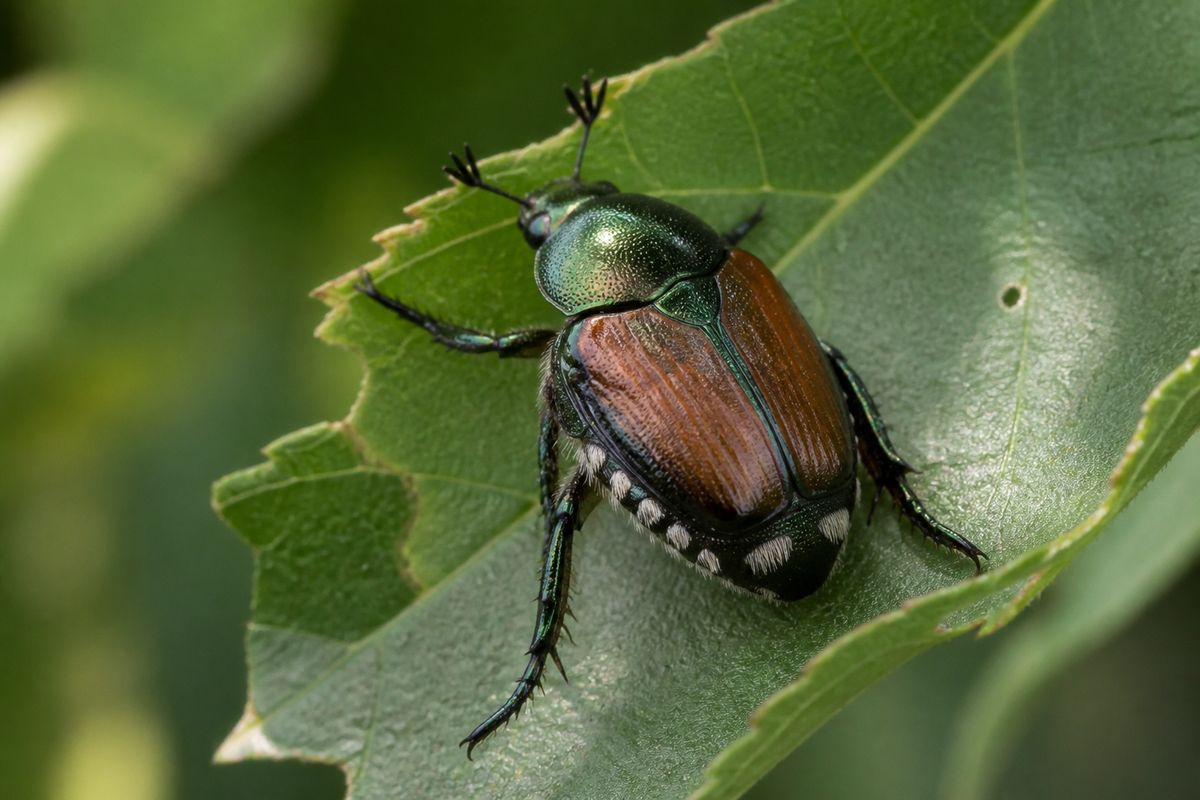
Where do Japanese beetles (Popillia japonica) live? In the eastern and midwestern United States, in the top few inches of turf soil as grubs and on host-plant foliage as adults, from a starting point in southern New Jersey just over a century ago. The species is native to Japan and has no natural range at all in North America; every population here traces back to a single accidental introduction.
How They Got to New Jersey
Entomologists Harry B. Weiss and Edgar L. Dickerson collected the first specimens in August 1916 while inspecting a nursery near Riverton, New Jersey, though the beetles weren't identified as Popillia japonica until the following spring, when samples reached the U.S. National Museum. Rutgers' Department of Entomology confirms the discovery was made at the nursery of Henry A. Dreer, Inc., about two and a half miles east of Riverton. The beetles almost certainly arrived as grubs in soil packed around imported iris or azalea roots, a route common before nursery stock was inspected for pests.
Where Adults Feed and Breed
Yards and Ornamental Plantings
Adult beetles cluster on roses, crape myrtle, linden, birch, and grapevines, skeletonizing leaves down to the veins while leaving the tougher tissue behind. Residential blocks with mixed ornamental plantings and irrigated lawns support both feeding adults and the grub populations that follow, since females lay eggs in the same turf the adults feed near.
Row Crops and Field Edges
Corn silk and soybean foliage draw heavy feeding in Midwest farm country, and beetle pressure on field edges can be dense enough to interfere with corn pollination if silks are clipped before ears set. Soybean fields tend to see feeding concentrate along the first several rows in from the margin rather than spread evenly across the field.
Forest Margins and Hedgerows
Where woodland meets open ground, beetles find wild grape, sassafras, and Virginia creeper alongside enough direct sun to keep body temperature up for flight and mating. These edge habitats also give some shelter from the birds and predatory insects that hunt more exposed adults.
Where the Grubs Live
The larval stage is what actually anchors a population to a place, since grubs can't travel far and feed on turfgrass roots for most of their nine- to ten-month development. Colorado State University Extension notes that larvae keep feeding until soil temperature drops to about 60°F, at which point they burrow deeper, and all activity stops once soil temperature falls below 50°F. That downward retreat is what lets grubs survive winters that would otherwise kill them, and it's also why grub damage to lawns shows up in distinct spring and late-summer feeding windows rather than year-round.
Current Range in North America
From that one New Jersey nursery, the beetle spread across most of the states east of the Mississippi within a few decades, aided by nursery stock shipments and its own short-range flight. Established populations are now common from the Northeast through the Midwest and into parts of the South, with isolated infestations turning up periodically in western states such as Colorado, Oregon, and California, usually traced back to soil or plant material moved from an infested area. States including New Jersey, Ohio, Illinois, Pennsylvania, and Maryland report some of the heaviest pressure, a mix of long establishment and agricultural land that keeps host plants and irrigated turf close together. Because a beetle-free West Coast matters for orchard and nursery trade, several western states run quarantine and trapping programs aimed at catching new introductions before they establish.
What Limits Where They Can Establish
Turf and Soil Moisture
Grubs need soil that holds enough moisture through summer for eggs and young larvae to survive; irrigated lawns and golf courses in otherwise dry regions can support populations that wouldn't persist in unwatered ground.
Winter Cold
Grubs that fail to burrow below the frost line before hard freezes die, which is one reason the beetle's range has been slower to push into the coldest parts of the northern Great Plains and interior Canada.
Host Plant Availability
Adults feed on more than 300 plant species, so a near-total absence of preferred hosts, rather than climate alone, is usually what keeps a local population from building up even where soil and temperature would allow it.
How New Infestations Start
Adults are strong enough fliers to move between nearby yards and fields on their own, but long-distance jumps almost always trace back to people: nursery stock with grubs in the root ball, sod cut from infested turf, or soil clinging to equipment moved between states. That's the pathway state and federal quarantine programs target, since a beetle that naturally disperses only short distances each season would otherwise take much longer to reach new regions.
Managing Populations Where They've Settled
Cultural Controls
Removing overripe or fallen fruit, avoiding heavy summer irrigation that favors egg survival, and choosing less-preferred plant species over roses and lindens in new plantings all reduce what a site offers the beetle.
Chemical Controls
Grub-targeted insecticides applied in mid to late summer, when eggs have hatched but larvae are still small and near the surface, work better than treatments timed to adult activity alone.
Biological Controls
Entomopathogenic nematodes applied to moist soil attack grubs directly, and the milky spore bacterium Bacillus popilliae has been used as a longer-term, slower-acting control in turf.
Living With an Established Population
A location that already has grubs surviving its winters and adults finding food each summer will keep supporting Japanese beetles unless the turf, host plants, or moisture conditions change. Knowing which of those factors is actually present on a given property is more useful for control planning than the beetle's broad regional range, since two yards a mile apart can carry very different grub pressure depending on irrigation and plant choice alone.