The Impact of the Industrial Revolution on Insect Populations
The Impact of the Industrial Revolution on Insect Populations shows up in soil cores, museum specimen drawers, and stream surveys alike. Between roughly 1760 and 1840, Britain and then continental Europe and North America shifted from wood and water power to coal, and from scattered workshops to concentrated factories and cities. That shift rewired insect habitat, air and water chemistry, and farmland structure within a few generations, and the effects are still measurable in today's biodiversity data.
Habitat Loss From Urban and Industrial Growth
Factory towns pulled rural workers into dense urban centers almost overnight. Manchester's population grew from about 25,000 in 1772 to more than 300,000 by 1850, and that growth came at the expense of surrounding woodland, hedgerow, and wetland. Insects tied to a single host plant or microhabitat had nowhere to go when it was paved or drained.
Urban Sprawl and Specialist Losses
Species with narrow host requirements were hit hardest. The large copper butterfly (Lycaena dispar dispar), which depended on fenland great water dock, was extirpated from England by 1864 after its wetland habitat around the Cambridgeshire fens was drained for agriculture and development. Generalist insects that could feed on many plants or tolerate disturbed ground, such as house flies and certain aphids, expanded instead.
Monoculture and Farmland Simplification
Enclosure acts and new machinery like Jethro Tull's seed drill pushed British farms toward larger, single-crop fields and away from mixed strips and fallow land. Hedgerows that had supported ground beetles, solitary bees, and moth larvae were grubbed out to make room for continuous wheat and turnip rotations, cutting the patchwork of microhabitats that diverse insect communities need.
Coal Smoke and Water Contamination
Coal was the Industrial Revolution's core fuel, and burning it at industrial scale released pollutants that reached far beyond factory walls.
Acid Rain From Coal Burning
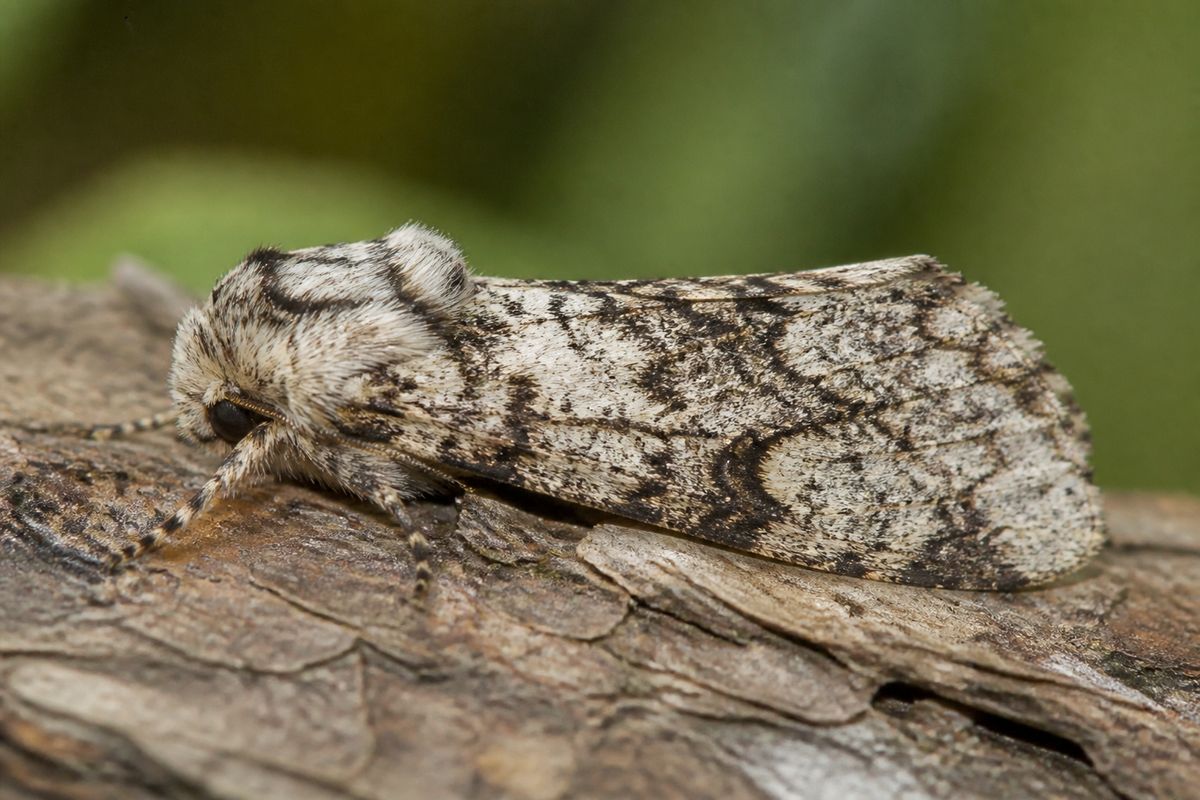
Coal combustion released sulfur dioxide and nitrogen oxides that combine with atmospheric moisture to form sulfuric and nitric acid. The EPA notes that acid rain leaches aluminum from soil and strips nutrients that trees need to grow, weakening the plants that host insects, and that aquatic insects such as mayflies struggle to survive once stream pH drops below about 5.5. One well-documented case is peppered moth (Biston betularia) melanism: soot-blackened tree bark in industrial England favored dark-colored moths over the pale form, a textbook example of pollution driving rapid natural selection.
River Pollution and Aquatic Insects
Textile mills, tanneries, and other industries discharged dyes, acids, and organic waste directly into rivers like the Irwell and the Thames, stripping dissolved oxygen from the water. Mayflies and caddisflies are gill-breathers that absorb pollutants directly from the water column, which is why caddisflies are one of the three most commonly used indicators of aquatic ecosystem health, along with mayflies and stoneflies. Where industrial rivers turned anoxic, these insects disappeared first.
Rising Emissions and Shifting Ranges
The Industrial Revolution marks the start of the sustained rise in atmospheric CO2 that ice core records show continuing to today, and the warming tied to those emissions has since reshaped insect life cycles and ranges.
Phenology and Emergence Timing
Temperature governs when many insects break diapause, emerge, or begin migration. As average temperatures climbed, some species began emerging weeks earlier than their historical baselines, which can decouple them from the flowering times or prey availability they evolved alongside.
Range Shifts to Higher Latitudes and Elevations
Species with the mobility to do so have shifted poleward or upslope in search of cooler conditions, a pattern documented repeatedly in butterfly range studies across Europe and North America. Where new arrivals compete with established residents for the same host plants, the incumbents can lose ground even without any direct habitat loss.
Synthetic Pesticides and Farm Chemistry
Large-scale chemical pest control is a later extension of industrial-era mechanization, but it followed the same logic: more output per acre, achieved by simplifying the system.
Neonicotinoids and Pollinator Harm
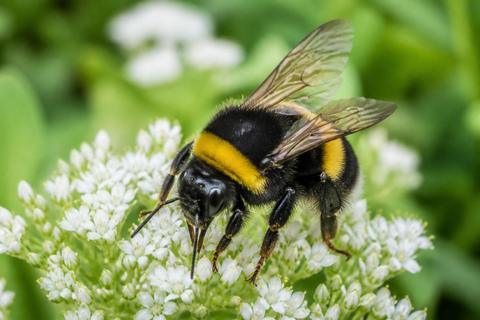
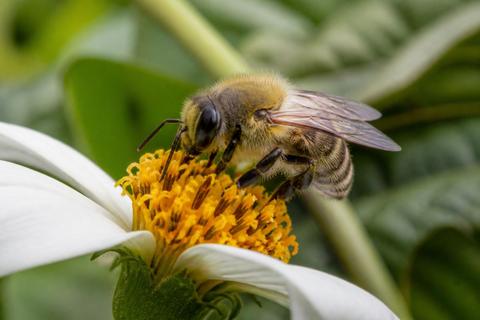
Modern neonicotinoid pesticides illustrate the tradeoff starkly. A 2017 study on thiamethoxam found that chronic exposure cut honey bee flight duration by 54%, flight distance by 56%, and average velocity by 7%, directly undermining the foraging flights bees depend on to feed a colony. Sublethal doses of related compounds have also been linked to reduced learning and altered foraging rhythms in bumblebees.
Monoculture's Chemical Treadmill
Single-crop fields concentrate pest species and remove the predatory insects, like ground beetles and parasitic wasps, that would otherwise keep them in check. Farmers respond with more frequent spraying, pests evolve resistance, and the cycle repeats with escalating chemical inputs rather than a return to the mixed-crop buffering that existed before enclosure.
Why Insect Declines Matter for Food Supply
Insects are not a side note to industrial-era ecology; they underpin the food system that industrialization itself came to depend on.
Crop Pollination
The Food and Agriculture Organization states that about 75% of global food crop types depend on pollinators, a group dominated by bees, along with butterflies, moths, and beetles. Declines in wild bee diversity translate directly into yield risk for the crops that rely on them.
Insects as Water and Soil Quality Indicators
Because species like mayflies and caddisflies disappear quickly when water chemistry degrades, biologists still use their presence or absence as a low-cost proxy for stream health, a monitoring method that traces directly back to the industrial-era pollution that first made it necessary.
The Legacy Written Into Today's Insect Populations
The specific mechanisms have changed since 1840. Coal smoke has given way to nitrogen runoff and neonicotinoids, and horse-drawn plows to GPS-guided combines. But the underlying pattern set during the Industrial Revolution, trading habitat and chemical stability for output, is the same one still driving insect population change today. The peppered moth's shift back toward its pale form as UK air quality improved after the Clean Air Act shows the process can run in reverse when the underlying pressure is removed.