Unique Characteristics of Rare and Exotic Beetles
Unique characteristics of rare and exotic beetles show up first in size and color, then in the stranger stuff: chemical weapons, horns built for wrestling, and life cycles tied to a single patch of forest. Coleoptera is the largest insect order, with roughly 350,000 described species, and the rare end of that list is where the extremes live.
Coloration, Size, and Physical Adaptations
Coloration
The golden tortoise beetle (Charidotella sexpunctata) can shift from a metallic gold sheen to dull red or spotted orange within minutes, a change driven by fluid moving in and out of microscopic grooves in its shell rather than pigment. The effect helps with both camouflage and mate recognition, and it disappears entirely after the beetle dies, which is why pinned museum specimens never show the living color.
Size
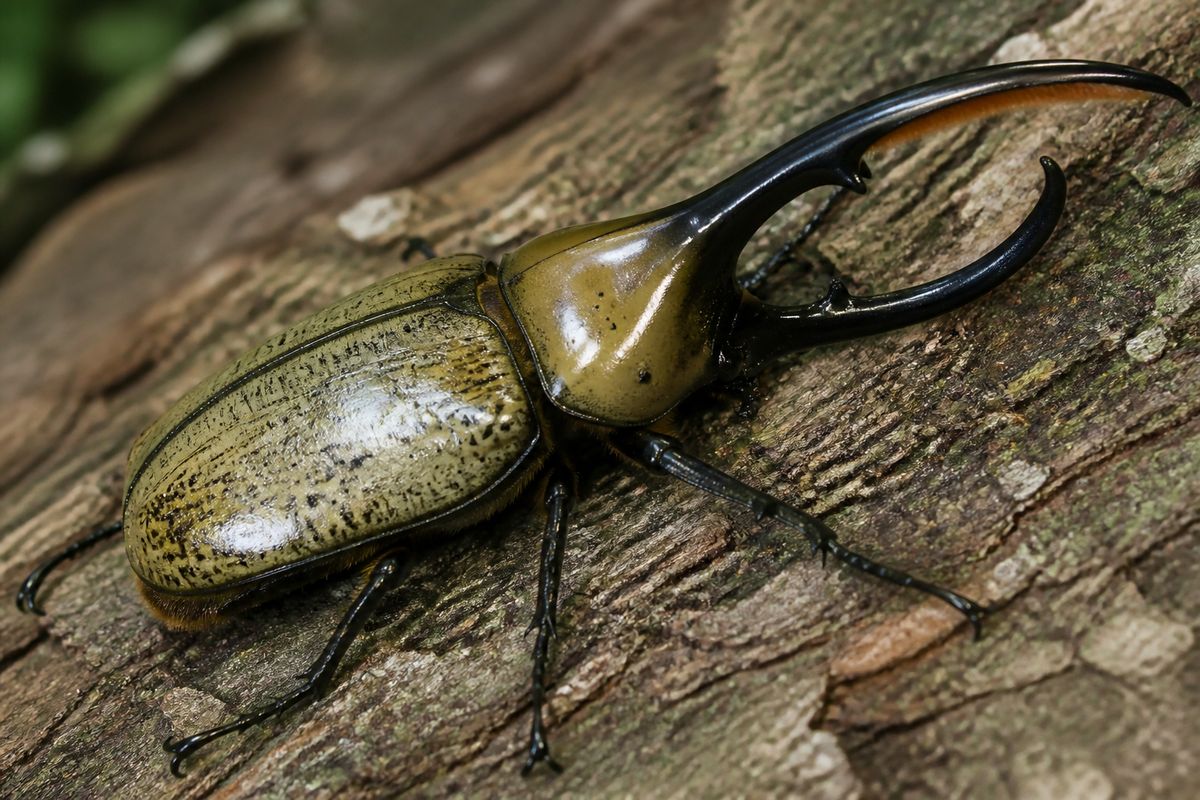
Beetle body length spans several orders of magnitude. Featherwing beetles in the family Ptiliidae are among the smallest beetles known, some under a millimeter long. At the other end, male Hercules beetles (Dynastes hercules) can reach up to 173 mm including the horn, making them the longest beetle species on record.
Antennae and Sensory Structures
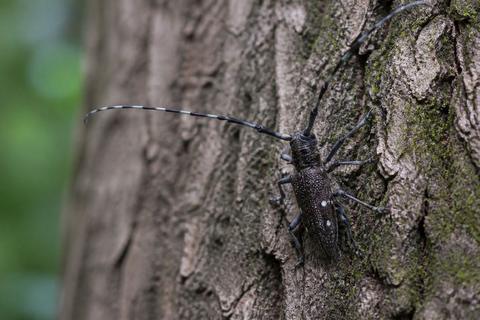
Longhorn beetles (family Cerambycidae) carry antennae that can exceed body length by several times. In species such as Batocera rufomaculata, these antennae detect pheromones and plant volatiles from a distance, letting a male locate a mate or a female locate a host tree before either is visible.
Mating Contests and Chemical Defense
Horn Combat
Male Hercules beetles fight over females using the horns on the head and pronotum like pliers, pinning and lifting a rival before flipping him onto his back. Fights continue until one male is thrown, injured, or retreats. Females lack horns entirely, which is the main reason males run longer than females even though overall adult body length (excluding the horn) overlaps between the sexes.
The Bombardier Beetle's Spray
Bombardier beetles (genus Brachinus) store hydroquinone and hydrogen peroxide in one gland and a mix of catalase and peroxidase enzymes in a second. When threatened, the beetle mixes the two: the reaction is exothermic enough that the resulting spray reaches about 100 degrees Celsius and fires with an audible pop, aimed with a rotating turret at the tip of the abdomen. A single beetle can discharge this spray up to about twenty times before its reserves run out.
Habitat Specialization and Endemism
Range-Restricted Species
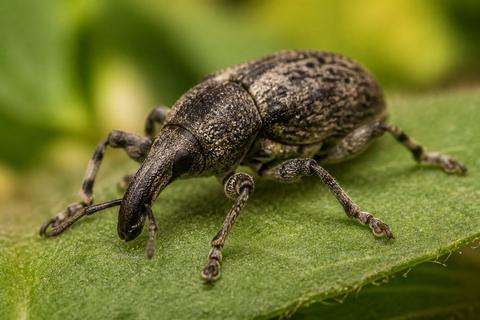
Many rare beetles occupy a single mountain range, cave system, or island chain and exist nowhere else. Flightless weevils on isolated islands are a common pattern: with no ground predators and limited space, wings become a liability rather than an asset, and natural selection favors beetles that stay put.
Microhabitats
Some species depend entirely on another organism's ecosystem engineering. Beetles that live inside leafcutter ant colonies feed on the ants' fungus gardens or on refuse piles, a relationship so specific that removing the ant colony removes the beetle too.
Three Species Worth Knowing
Goliath Beetle (Goliathus goliatus)
Adult males range from roughly 50 to 110 mm in body length, among the largest of any beetle by bulk. It is the larval stage, not the adult, that produces the most extreme size figures often quoted for this species: third-instar Goliathus goliatus larvae reach 114 to 150 mm in body length before pupating. Adults are native to the tropical forests of Central and West Africa and show marked sexual dimorphism, with males carrying a Y-shaped head horn used in combat.
Hercules Beetle (Dynastes hercules)
Found in the rainforests of Central and South America, males use their oversized thoracic horn to generate substantial pinching force during fights over mates, then discard losing rivals by flipping them off tree trunks. The species holds the record for longest beetle when horn length is included in the measurement.
Rainbow Scarab (Cetonischema aureola)
Native to Southeast Asia, this scarab's exoskeleton produces a shifting metallic sheen across green, copper, and violet depending on viewing angle. Like the golden tortoise beetle, the color comes from microstructure rather than pigment, breaking up the beetle's outline among leaves while also signaling to potential mates.
Threats to Rare Beetle Populations
Habitat Loss
Deforestation, land conversion for agriculture, and urban expansion fragment the forest patches many rare beetles depend on, cutting off breeding populations from each other and narrowing the gene pool over successive generations.
Climate Shifts
Species tied to a narrow temperature or moisture band get squeezed as conditions change: some are pushed toward higher elevations or latitudes, where they compete with beetles already established there.
Pesticide Exposure
Agricultural runoff and broad-spectrum pesticides affect beetles that never touch a crop field directly, since larvae developing in soil or leaf litter downstream absorb the same chemicals.
What Conservation Work Looks Like
-
Habitat restoration: replanting native vegetation and reconnecting fragmented forest patches so isolated beetle populations can interbreed again.
-
Population monitoring: repeated surveys of known sites track whether a species is stable, declining, or already gone, which determines what protection status it gets.
-
Public reporting: citizen science platforms let amateur collectors and hikers log sightings of rare species, often turning up populations researchers didn't know existed.
Why the Rare Ones Matter
A Hercules beetle's horn, a bombardier beetle's chemical turret, and a Goliath beetle's larval growth rate are not separate curiosities. Each is a solution to a specific survival problem, refined over a long evolutionary run, and each disappears permanently once its habitat does. That is the case for protecting the forest patches and islands where these species still hold on.