How Terrestrial Ecosystems Shape Insect Diversity
Understanding the Influence of Terrestrial Ecosystems on Insect Diversity starts with a simple fact: insects make up more described species than every other animal group combined, and researchers estimate the true total sits near 5.5 million species, with a plausible range of 2.6 to 7.8 million. Terrestrial ecosystems, forests, grasslands, deserts, and wetlands, set the physical and chemical conditions that decide which of those species can actually survive in a given place.
How Climate Sets the Ceiling on Diversity
Temperature and rainfall determine how many insect niches an ecosystem can support, and how stable those niches stay through the year.
Rainforests, Temperate Forests, and Deserts Compared
-
Tropical rainforests: Consistently warm temperatures and year-round rainfall support the planet's densest insect communities. Vertical layering compounds this: a Malaise-trap study on a canopy tower near Manaus, Brazil sampled 37,778 specimens across 18 orders and found that over two-thirds of total insect abundance was collected in traps set above ground level, even though ground level itself held the single highest count, with flies, wasps, and beetles concentrated near the forest floor and moths and true bugs more common in the upper canopy.
-
Temperate forests: Four distinct seasons force insect populations to cycle through diapause, emergence, and die-off each year, so the species that dominate are the ones built to track those swings, not the ones best suited to any single season.
-
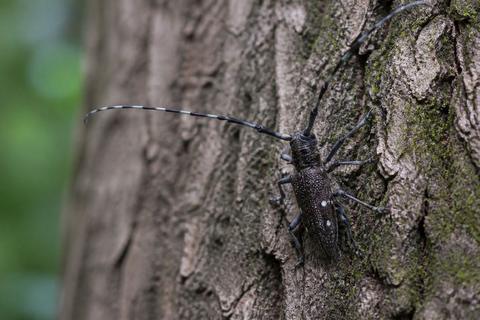
Deserts: Low, unpredictable rainfall and extreme daily temperature swings cut the number of viable niches sharply. The insects that persist, such as darkling beetles and certain ant genera, tend to show narrow specializations like waxy cuticles or nocturnal foraging rather than broad tolerance.
Habitat Structure and Microhabitats
Physical complexity, not just climate, decides how many species can pack into the same square meter.
-
Vertical layering: Canopy, understory, and forest floor each host a largely separate insect community, since leaf-feeders, sap-suckers, and litter decomposers rarely compete for the same resource at the same height.
-
Microhabitats: Leaf litter, bark crevices, and rotting logs each hold their own small community, sheltered from both predators and temperature extremes that would otherwise wipe out a more exposed population.
Food and Resource Availability
-
Flowering plant diversity: Sites with more plant species in bloom at different times keep pollinators fed across a longer season, which supports more pollinator species than a site with one or two bloom windows.
-
Decomposing material: Fungi and detritivores break down dead wood and leaf litter into a resource base that supports beetle larvae, termites, and fly maggots that couldn't survive on living plant tissue alone.
Predation, Competition, and Mutualism
The relationships between species, not just the physical habitat, shape how many insects an ecosystem can hold.
Predators and Competitors
-
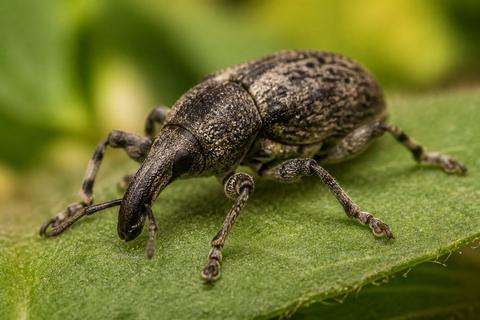
Top-down control: Birds, spiders, and predatory insects such as ground beetles keep any single herbivore population from monopolizing a food source, which leaves room for multiple herbivore species to coexist on the same plants.
-
Competitive exclusion: When two species compete for an identical resource, one typically shifts its diet, activity time, or habitat rather than disappearing, a process that produces the fine-grained specialization seen in many beetle and wasp genera.
Pollination and Other Mutualisms
-
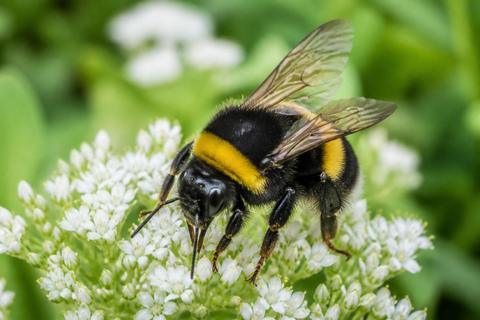
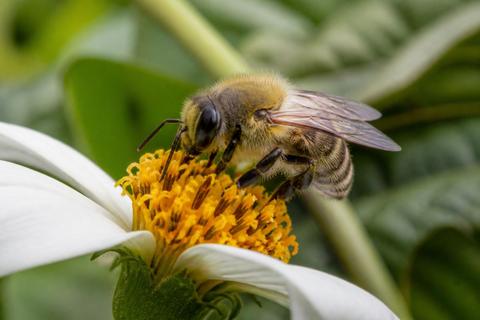
Pollination: Bees, flies, moths, and beetles trade pollination services for nectar and pollen, a relationship that has driven both flowering-plant diversification and insect diversification over tens of millions of years.
-
Soil and root interactions: Ants and burrowing beetles aerate soil and move organic matter as they tunnel, which improves root access to nutrients and indirectly supports the vegetation that other insects depend on.
Human Pressure on Insect Habitat
Deforestation, farming, and urban expansion are reshaping terrestrial ecosystems faster than most insect populations can adapt.
Habitat Loss and Monoculture
Converting a structurally complex forest or prairie into cropland or pavement removes most of the microhabitats and food sources described above in one step.
- Monocultures: A field planted with a single crop offers one bloom window, one plant architecture, and one set of chemical defenses, which supports a fraction of the insect species a mixed native stand would.
Shifting Climate and Timing
-
Range shifts: Species are tracking cooler conditions toward higher elevations and latitudes, which can separate an insect from the host plant or predator it evolved alongside.
-
Phenological mismatch: When plants bloom earlier than historical averages but the insects that depend on them still emerge on the old schedule, both the pollinator and the plant lose out.
Pesticide Exposure
-
Systemic insecticides: Neonicotinoids are absorbed through a plant's roots, leaves, and stems and move through its vascular system, and can persist in plant tissue from months to multiple seasons, reaching pollinators through nectar, pollen, honeydew, and even the water droplets plants release overnight.
-
Soil and runoff effects: Agricultural runoff degrades soil structure and fertility, which weakens plant growth and, in turn, shrinks the habitat and food supply available to the insects that depend on that vegetation.
Protecting Insect Diversity Starts With the Habitat
Insect diversity tracks the condition of the terrestrial ecosystem underneath it almost exactly: intact vertical structure, varied bloom times, and undisturbed soil support far more species than a simplified, chemically managed landscape ever will. Conservation efforts that preserve habitat complexity, from canopy layers to leaf litter, do more for insect populations than any single-species intervention, and the payoff extends to the birds, plants, and soil systems that depend on those insects in turn.
Sources
- Stork, N.E. (2018), 'How Many Species of Insects and Other Terrestrial Arthropods Are There on Earth?', Annual Review of Entomology, hosted on PMC (NCBI/NIH)
- 'Vertical stratification of insect abundance and species richness in an Amazonian tropical forest', peer-reviewed study hosted on PMC (NCBI/NIH)
- University of Maryland Extension, 'Pollinators and Pesticides'