What Are the Characteristics of Yellowjackets? Nest to Sting
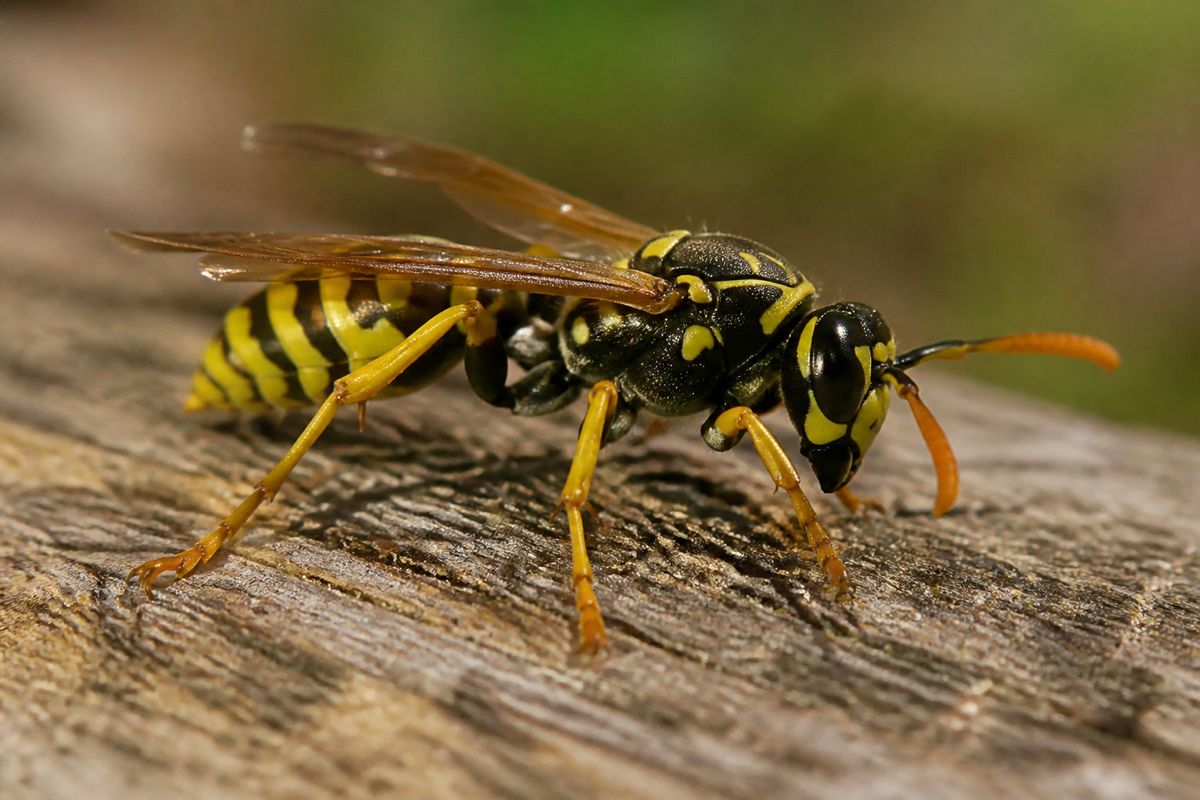
What are the characteristics of yellowjackets? They belong to the wasp genera Vespula and Dolichovespula, in the family Vespidae, and they're built compact and hard-shelled compared to the bees people often mistake them for. Three species turn up most often in North American yards: the eastern yellowjacket (Vespula maculifrons), the western yellowjacket (Vespula pensylvanica), and the German yellowjacket (Vespula germanica).
Size of Yellowjackets
Workers vs. Queens
Adult yellowjackets run 1/2 to 1 inch long, with the range split by caste rather than random variation.
- Workers: about 0.5 to 0.75 inches (12 to 19 mm), the size most people actually encounter around trash cans and picnic tables.
- Queens: 0.75 to 1 inch (19 to 25 mm), noticeably bulkier since she is the one laying every egg the colony produces.
The size difference is not just cosmetic. A queen has to survive winter alone and single-handedly found a new nest each spring, so she carries more fat reserves and a larger abdomen than any worker she will go on to produce.
How They Compare to Other Wasps
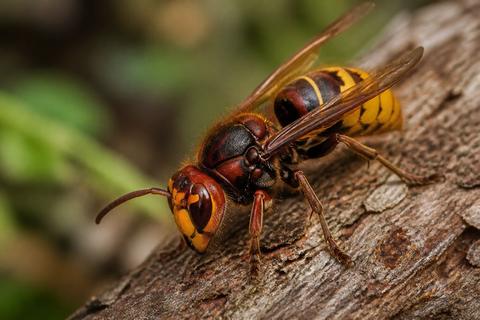
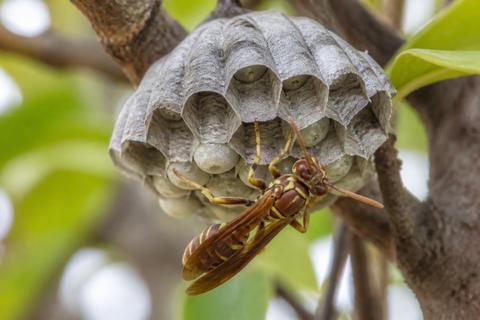
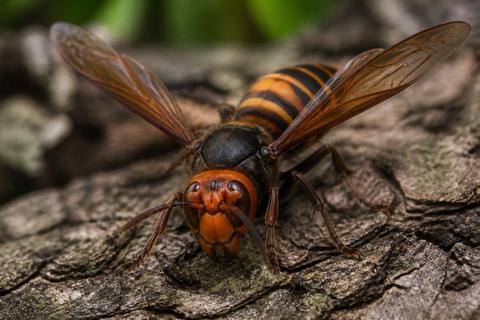
Paper wasps are longer-legged and more slender, with a visibly narrow waist and a habit of dangling their legs in flight. Hornets, by contrast, outsize yellowjackets outright, with some species reaching 2 inches (50 mm). Yellowjackets sit in between, shorter and denser than either, which is part of why their flight looks so fast and jerky next to a paper wasp's more casual glide.
Color and Markings
The Black-and-Yellow Pattern
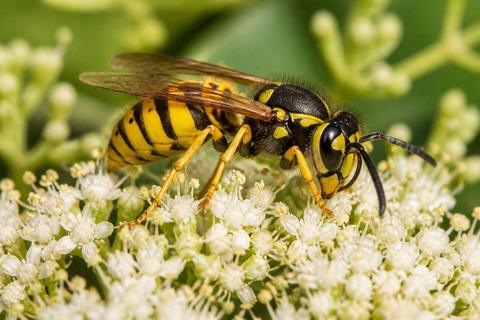
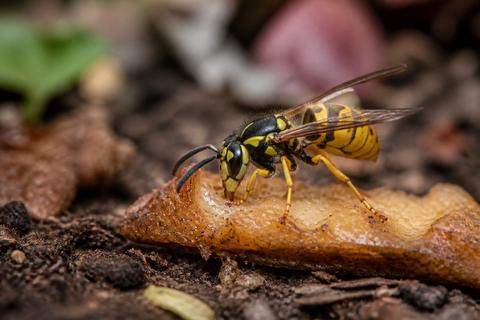
The banding is the fastest way to identify one in the yard. Eastern yellowjackets show thick black bands on the abdomen broken by narrow yellow slivers; abdominal dot patterns vary a lot between individuals even within the same species, so they're not reliable for telling species apart, but German yellowjackets do have a fairly consistent tell up close: three small black dots on the face. Some individuals show white or pale orange in place of yellow, particularly in western species, which is why relying on color alone can misidentify a bald-faced hornet (black and white, not yellow) as a yellowjacket.
Why the Colors Exist
The contrast is a warning display, not decoration. Birds and other predators that survive one encounter with the sting learn to avoid the pattern afterward, and several harmless flies and moths have evolved to mimic it purely to borrow that reputation.
Colony Structure and Behavior
Queens, Workers, and Males
A mature colony can hold anywhere from a few dozen wasps to several thousand by the height of summer. Roles are fixed by caste:
- Queen: overwinters alone, then starts the nest solo each spring and lays every egg until the first workers take over foraging.
- Workers: sterile females that forage, chew wood pulp for nest expansion, and feed larvae.
- Males (drones): appear only late in the season, exist to mate with new queens, and die shortly after.
Nest Construction
Colonies build nests from wood fiber scraped from fences, siding, or dead wood and mixed with saliva into a paper pulp, then layered into horizontal combs wrapped in a papery envelope. Eastern yellowjackets most often start that nest in an abandoned rodent burrow underground; other species build in wall voids, attics, hollow trees, or exposed under eaves. A nest that starts the size of a golf ball in May can fill an underground cavity or reach the size of a basketball by September as the colony adds tiers.
What They Eat
Diet shifts over the season. In spring and early summer, workers forage mainly for protein, hunting caterpillars, flies, and other soft-bodied insects to chew up and feed to the larvae back at the nest, which makes them useful predators around gardens. By late summer, brood production slows and the colony's own sugar demand rises, so workers begin aggressively pursuing food as nectar sources dwindle, which is exactly when they start showing up at soda cans, fallen fruit, and picnic tables.
Stinging and Defense
A yellowjacket's stinger has no barb, so unlike a honeybee it can withdraw it cleanly and sting repeatedly, injecting venom with every strike. Nest defense is aggressive by design: disturbing a nest, even by lawnmower vibration, brings out workers in numbers, and a crushed or swatted wasp releases an alarm pheromone that recruits nestmates to the same spot. That is the practical reason pest control guides tell people never to swat at one near a nest entrance.
Mating and the Fall Die-Off
New queens and males emerge together in late summer. Mating happens away from the nest, after which males die within days and mated queens seek out leaf litter, loose bark, or soil crevices to overwinter. The old nest, along with the original queen and every worker in it, dies with the first hard frost and is never reused the following year.
Why Yellowjackets Matter Outdoors
Their reputation is mostly about late-summer encounters near food, but the same wasps spend spring and early summer removing garden pests by the thousands. A single colony can clear a meaningful number of caterpillars and flies from a yard before its diet shifts toward sugar, and workers foraging at flowers for nectar move some pollen along the way, even though they are far less efficient at it than bees. Recognizing which part of the season it is explains most of the difference between a beneficial insect and a picnic hazard.