Where Do Hornets Live? Nest Sites From Trees to Burrows
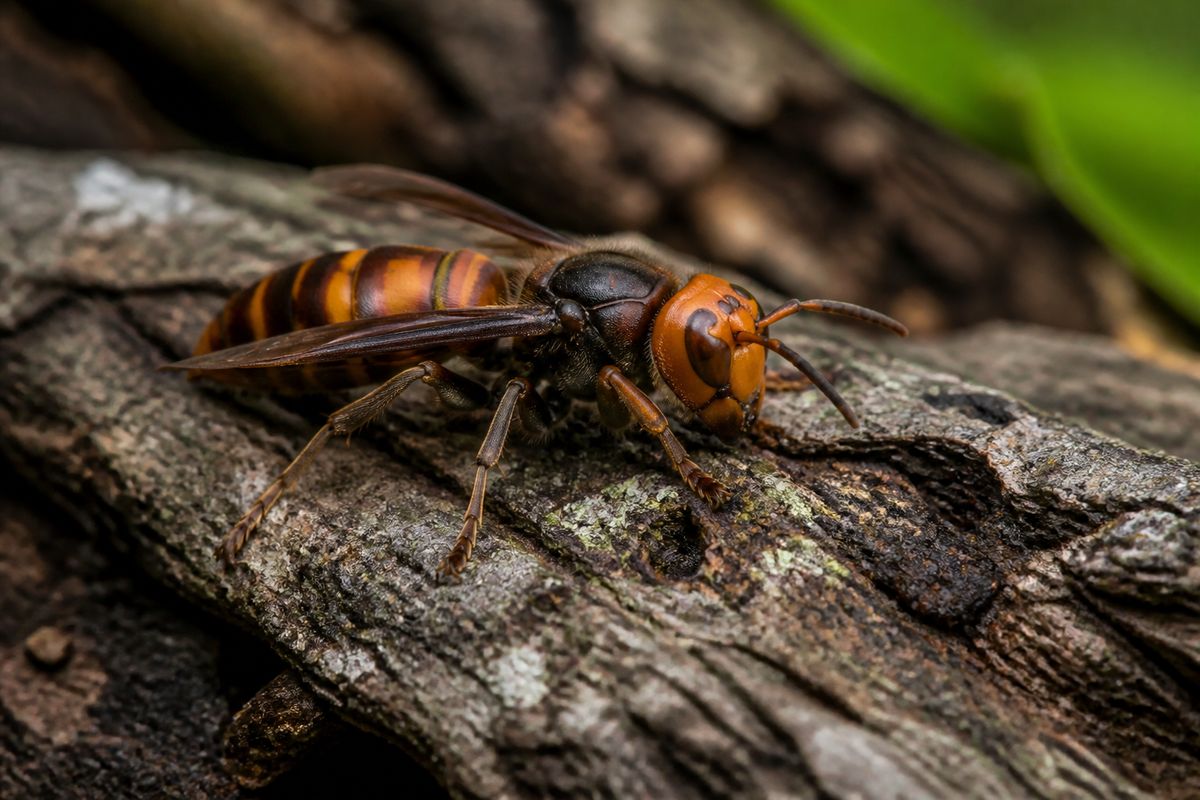
Where do hornets live? It depends on the species. The bald-faced hornet (Dolichovespula maculata) hangs its gray paper nest in a tree or under a roofline, while the European hornet (Vespa crabro) tucks its colony inside a hollow tree trunk or a house wall void. A few species skip the aerial route entirely and nest underground.
What Counts as a Hornet
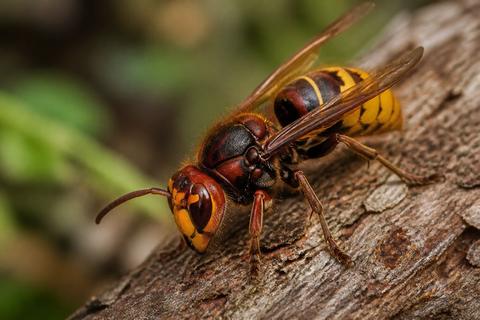
True hornets belong to the genus Vespa. Only one, the European hornet, is established in North America, introduced to New York around 1840 and now common through the eastern United States as far west as Oklahoma and Kansas. The insect most Americans call a "hornet," the bald-faced hornet, is not a true hornet at all; it's a black-and-white yellowjacket relative in the genus Dolichovespula. Both build large paper nests and deliver a painful sting, which is why the common name sticks regardless of the taxonomy.
Where Hornets Build Their Nests
Nest placement splits into three patterns, and knowing which one applies to a given species tells you where to look.
Aerial Nests in Trees and Structures
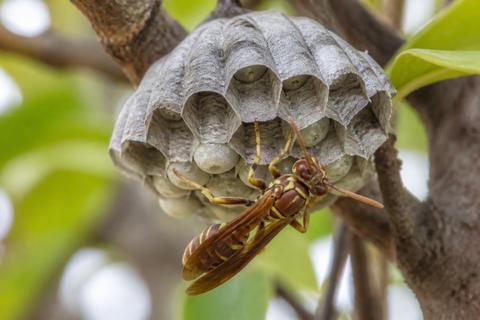
Bald-faced hornets build large, gray cardboard nests in trees, usually suspended from a branch, though nests also turn up on shrubs, porch ceilings, and building eaves. The nest is built from chewed wood fiber and saliva, with an entrance hole near the bottom of the outer carton.
Cavity Nests in Hollow Trees and Wall Voids
European hornets prefer an enclosed cavity over an exposed branch. Their nests are typically found in protected aerial areas, such as a hollow in a large standing tree, and sometimes in the wall voids of houses. This habit makes them more likely than bald-faced hornets to end up nesting inside occupied buildings.
Underground Nests
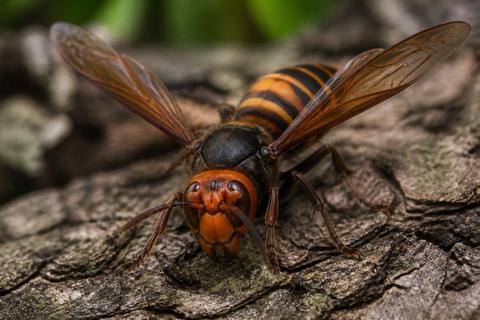
The Asian giant hornet (Vespa mandarinia), no longer established in the United States after its Washington State incursion was declared eradicated in December 2024, nested almost exclusively underground. It built nests in the ground by taking advantage of existing structures such as hollow trees or rodent tunnels rather than excavating from scratch. European hornets occasionally nest below ground too, though it's the exception rather than the rule for that species.
Habitat Beyond the Nest Site
Nest location is only half the picture; hornets also need forage nearby. Wooded edges and hedgerows supply both nesting cavities and prey insects. Suburban yards work just as well once a colony finds a foothold: garden flowers supply nectar, and unsecured trash or fallen fruit supplies protein and sugar. Agricultural land draws hornets for the same reason, since crop pests and blossoms both concentrate food in one place.
Range Across North America
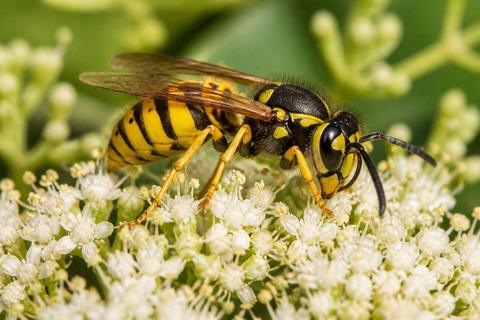
Bald-faced hornets range across most of the continental United States and Canada, with colonies most visible from midsummer through early fall as worker numbers peak. European hornets are concentrated in the eastern half of the country, having spread from their original New York introduction point down to the Gulf Coast and out to the Great Plains. West of that range, hornet sightings are more often bald-faced hornets, yellowjackets, or paper wasps misidentified as hornets.
Why Climate and Food Drive Distribution
Colony size and survival track two variables directly. Longer warm seasons let a colony grow larger before the first hard freeze kills off all but the new queens, so nests in the South and mid-Atlantic tend to outgrow their northern counterparts. Food density matters just as much: a yard or field with steady insect and nectar sources supports a colony through the entire season, while a barren lot gets abandoned early. Nest-building material availability plays a smaller but real role, since paper-nesting species need a steady supply of weathered wood fiber within flying range of the nest.
Handling a Nest You've Found
-
Keep your distance. Hornets defend the nest, not the surrounding area, so a wide berth is usually enough to avoid a sting.
-
Call a professional for active nests near entryways. Removal requires protective gear and is not a do-it-yourself job once a colony is established, especially for anyone with a sting allergy.
-
Remove what draws them in. Sealed trash cans, cleaned-up fallen fruit, and capped compost bins cut down on the food sources that pull foraging hornets toward a yard in the first place.