Where Do Yellowjackets Live? From Burrows to Attics
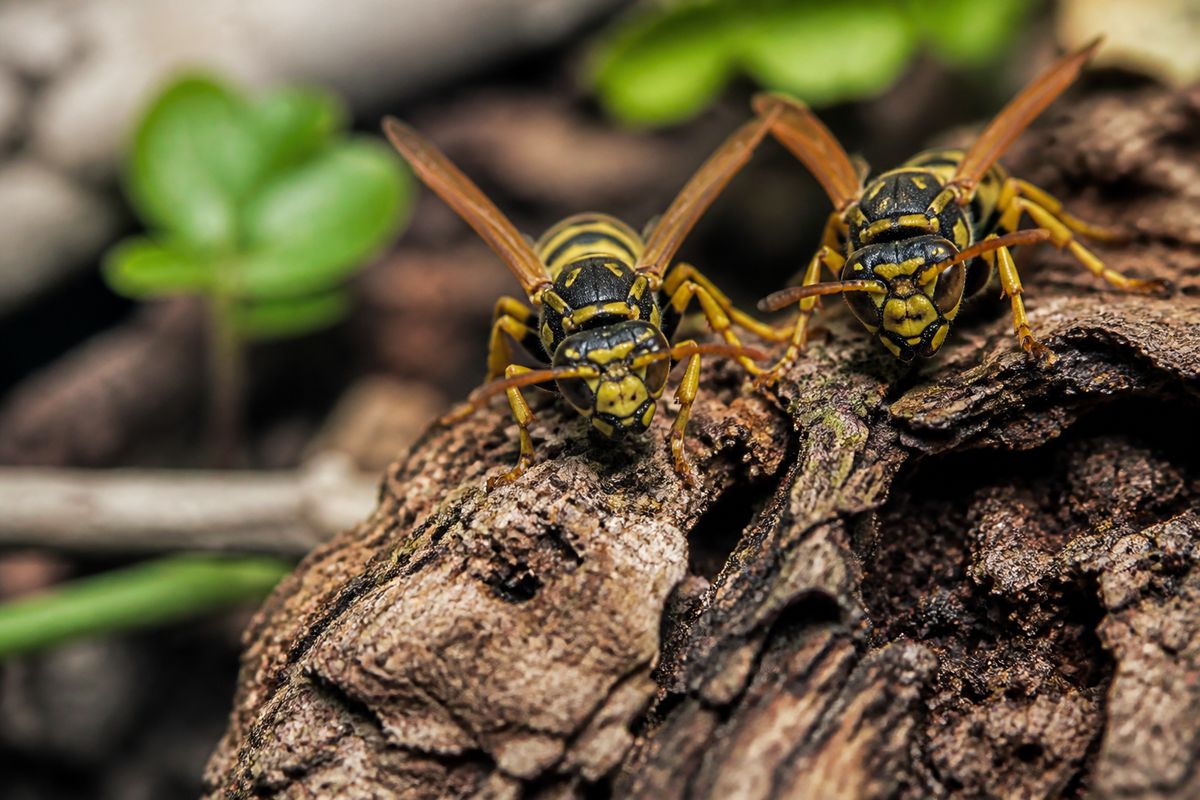
Where do yellowjackets live? Most colonies start in an abandoned rodent burrow, though the same wasps will just as readily move into a wall void, an attic, or a hollow log if the spot is dark, enclosed, and close to food. They belong to the genus Vespula (with a few species in Dolichovespula), and a single nest can hold a queen plus thousands of sterile female workers by late summer. Knowing where they nest and how their range shifts through the year makes it much easier to spot a colony before you walk into one.
What Counts as a Yellowjacket
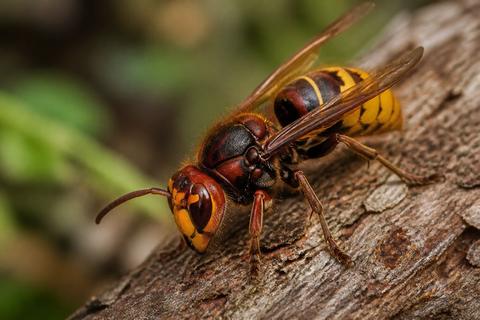
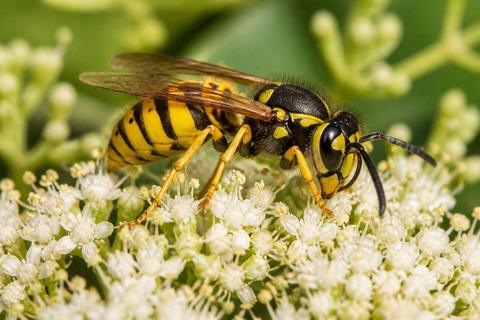
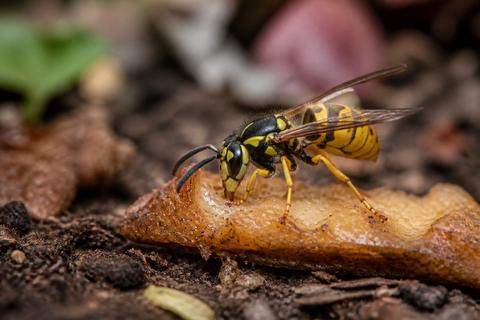
Yellowjackets are black-and-yellow social wasps in the family Vespidae, distinct from honey bees and from the larger, all-black-and-white bald-faced hornet (Dolichovespula maculata, which is technically a yellowjacket relative, not a true hornet). A colony is founded each spring by one mated queen and can grow to between 1,500 and 15,000 individuals by autumn depending on the species. They hunt caterpillars, flies, and other insects to feed their larvae, which makes them useful pest predators even though their sting ruins a lot of picnics.
Where They Build Nests
Nest placement comes down to shelter, not scenery. The three patterns below cover almost every yellowjacket nest you're likely to find.
Underground in Old Rodent Burrows
Most ground-nesting species, including the eastern yellowjacket (Vespula maculifrons) and the western yellowjacket (Vespula pensylvanica), commonly build nests in abandoned rodent burrows rather than digging their own. An abandoned chipmunk or vole burrow already has the right diameter and depth, and the surrounding soil buffers the nest from temperature swings. Workers chew wood fibers into a gray paper pulp and build tiered combs downward from the burrow's original entrance.
Wall Voids, Attics, and Eaves
The same species that nest underground will switch to a wall cavity, attic, or crawlspace if one is available, especially in developed areas. A gap around a utility pipe or a loose vent screen is enough of an opening. These indoor colonies are the ones most likely to end up needing professional removal, since the nest is invisible until workers start streaming out of a wall outlet or baseboard.
Aerial Nests in Trees and Shrubs
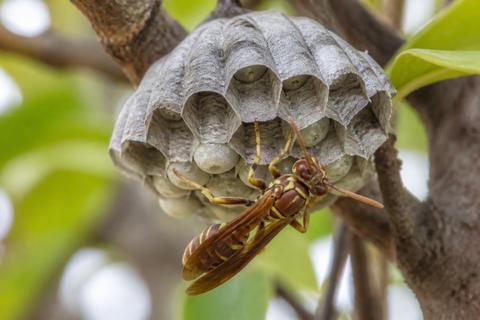
A smaller group, including the aerial yellowjacket (Dolichovespula arenaria) and the bald-faced hornet, build exposed, football-shaped paper nests hanging from tree branches, eaves, or dense shrubs instead of nesting in cavities. These nests are easier to spot from a distance, which is one reason aerial species cause fewer surprise stings than the burrow-nesting ones.
What Draws Them to a Site
Beyond shelter, three resources shape where a colony settles and how far workers range to forage.
- Protein in spring and summer: While the nest is growing, workers forage mainly for insects and other protein to feed the larvae, with only light interest in sugar.
- Sugar from midsummer on: Once the colony stops producing new larvae, workers switch to scavenging sugary food and drinks, which is why trash cans and picnic tables draw crowds of them in August and September.
- Standing water: Colonies need a nearby water source to regulate nest humidity, so ponds, birdbaths, and leaky outdoor faucets are common landmarks near a nest.
Range Across North America
Yellowjackets are present in every U.S. state and most of Canada, but which species you'll meet changes by region.
Eastern and Midwestern States
Vespula maculifrons is the dominant species from the Atlantic coast west through the Midwest, nesting in lawns, wood edges, and increasingly in suburban structures.
Western States
Vespula pensylvanica, sometimes called the "meat bee," is the most commonly encountered species across the West Coast and much of the Rocky Mountain region, and is the species behind most aggressive nest-defense incidents reported in California parks and campgrounds.
Southern States
Mild winters in Florida, the Gulf Coast, and Southern California let some colonies survive longer into the cold season than they would farther north, and in the mildest coastal areas a nest can occasionally persist for more than one year, growing unusually large in the process.
Canada and Beyond
Vespula vulgaris, the common yellowjacket, ranges across southern Canada and is also native to Europe and parts of Asia, where it follows the same burrow-and-cavity nesting pattern as its North American relatives.
How the Colony Changes Through the Year
A yellowjacket nest is not a fixed population. It starts from one wasp and ends the season as thousands.
- Spring (March-May): The overwintered queen emerges alone, picks a site, and raises the first handful of workers by herself.
- Summer (June-August): Workers take over foraging and nest-building, and the colony's population climbs fast as more brood hatches.
- Late summer to fall (September-November): The nest produces new queens and males, worker numbers peak, and foraging turns aggressive as protein sources for brood dry up.
- Winter (December-February): The founding queen, workers, and males all die with the first hard frosts. Only newly mated queens survive, each overwintering alone under a fallen log or in a tree crevice until spring.
Reducing Encounters Near a Nest
Most stings happen when someone steps on a ground nest entrance or disturbs one hidden in siding. A few precautions cut that risk substantially.
- Watch the ground near mulch beds, compost piles, and wood edges, where a small hole with wasp traffic is the only visible sign of an underground nest.
- Keep food and drinks covered outdoors from midsummer on, when workers are actively hunting for sugar rather than protein.
- Leave an active nest to a pest control professional if it's inside a wall or near a doorway. Ground nests especially can hold thousands of defensive workers, and disturbing the entrance triggers a mass response.
Spotting a Nest Before It Becomes a Problem
The pattern worth remembering is simple: yellowjackets nest wherever they find a sheltered cavity near food and water, whether that's a rodent burrow in the lawn, a gap in the siding, or a branch overhead. Watching for wasp traffic in and out of a single small opening, rather than waiting to find the nest itself, is what keeps a summer cookout sting-free.