What Do Paper Wasps Eat? Chewed Prey, Nectar, and Honeydew
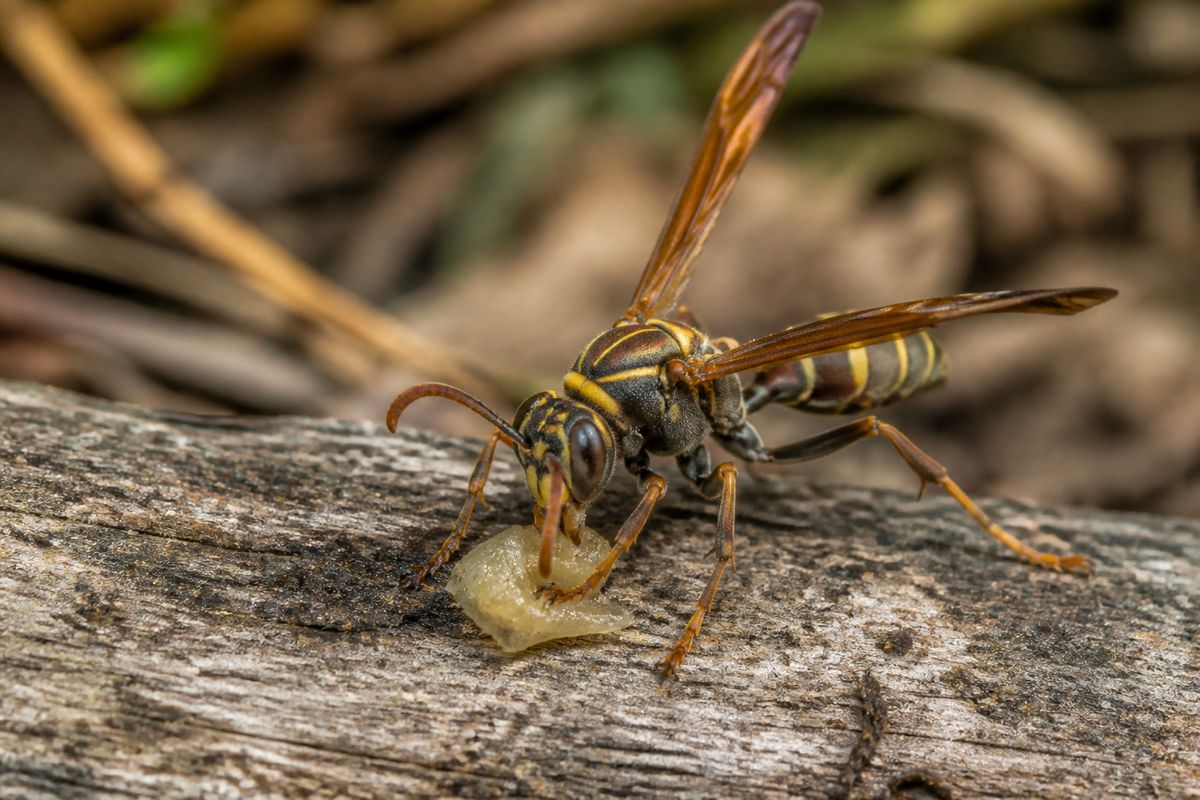
What do paper wasps eat? Adults run on a liquid, sugar-based diet, while the colony's larvae need protein. Workers hunt caterpillars and other soft-bodied insects, chew them into a paste, and roll the pulp into a ball for the trip back to the nest, where it's fed directly to the brood.
Where Paper Wasps Fit
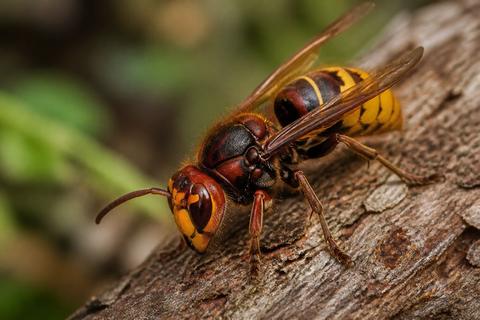
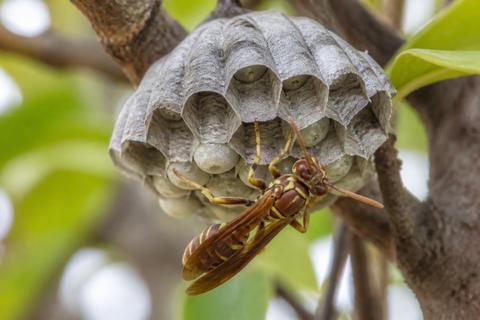
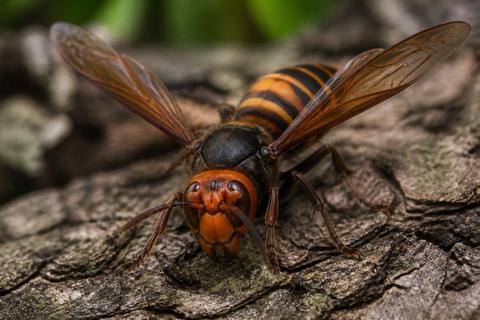
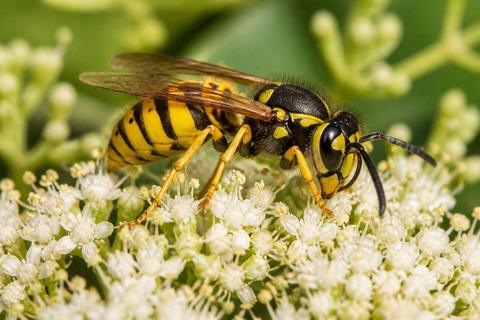
Paper wasps belong to the family Vespidae, the same family as yellowjackets and hornets, but they build open, umbrella-shaped combs instead of enclosed nests. The comb is made from wood fiber the wasps scrape from fence posts and dead branches, chew with saliva, and spread into papery cells.
Compared to yellowjackets, paper wasps are less defensive around their nests and rarely sting unless the nest itself is disturbed or handled.
Protein: What the Larvae Eat
Larvae can't hunt for themselves, so every protein meal comes from an adult forager.
Insect Prey
Paper wasps target caterpillars, flies, and other soft-bodied insects. A worker stings and paralyzes the prey, then chews it into a pulp before carrying it to the nest and feeding it to the larvae. Some native paper wasps focus almost entirely on caterpillars, while the introduced European paper wasp (Polistes dominula) takes a broader range of soft-bodied insects.
Scavenged Protein
Paper wasps also take protein where they find it already dead, including carrion and other insect remains. This scavenging returns nutrients to the surrounding soil and plants faster than decomposition alone.
Carbohydrates: What the Adults Eat
Adult wasps need quick energy for flight, hunting, and nest building, and they get it from sugar rather than protein.
Nectar
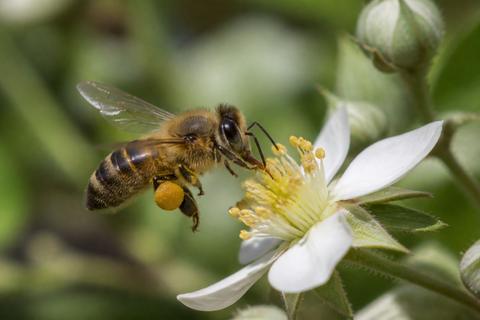
Paper wasps visit flowering plants for nectar, which fuels the muscles used in flight and foraging. In the process they move pollen between blooms, though they're far less efficient pollinators than bees.
Ripe and Damaged Fruit
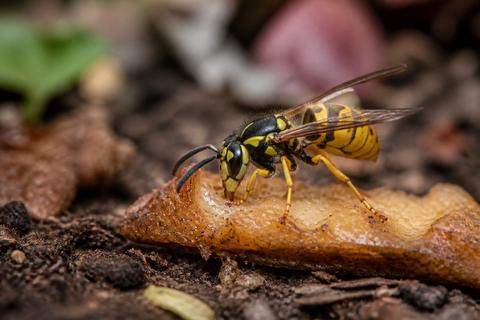
Overripe or split fruit, apples and peaches especially, gives wasps direct access to sugar without a flower's effort. Orchards and backyard fruit trees can draw large numbers of foragers in late summer.
Honeydew
Aphids excrete a sugary waste called honeydew, and paper wasps will feed on it directly from leaves or aphid colonies. Heavy wasp activity around a plant is sometimes the first sign of an aphid infestation nearby.
How Diet Shifts Through the Season
Spring: Founding the Colony
A single overwintered queen starts the nest alone and hunts protein for her first batch of larvae, since there are no workers yet to help.
Summer: Peak Demand
Once workers emerge, the colony splits its labor: some forage for insect prey to feed the growing brood, others collect nectar and honeydew to fuel the nest's activity. Colony size, and food demand, peaks in mid- to late summer.
Fall: Chasing Sugar
As insect prey becomes scarce and the brood-rearing season winds down, wasps shift toward fruit, honeydew, and any sugar source they can find, which is why they show up at picnics and trash cans more often in September and October.
Winter: Dormancy
The colony's workers and old queen die off with the first hard frosts. Only newly mated queens survive, overwintering alone under bark, in wall voids, or other sheltered spots. They don't feed during this dormancy, running instead on fat reserves built up in fall.
Finding and Communicating Food
Scout wasps fly out from the nest to locate prey and sugar sources, relying on vision and memory to track productive spots. When a scout finds a good source, other foragers key in on the same location, likely cued by scent trails and the returning wasp's behavior at the nest rather than anything like a honeybee's waggle dance.
Why Their Diet Matters Outside the Nest
The same feeding habits that sustain a paper wasp colony also shape its role in the yard and garden.
- Pest suppression: because larvae need a steady supply of caterpillars and other soft-bodied insects, an active nest can meaningfully reduce pest pressure on nearby plants.
- Incidental pollination: nectar visits move pollen between plants, even though paper wasps lack the branched hairs that make bees efficient pollen carriers.
- Nutrient cycling: scavenged carrion and insect remains get broken down and returned to the ecosystem faster than they would through decomposition alone.
Knowing what paper wasps actually eat, and when, makes it easier to predict where they'll show up: near caterpillar-infested plants in early summer, around ripe fruit and trash in fall, and almost nowhere at all once winter sets in.